Why You Keep Abandoning Your Learning Goals — and the Structural Fix That Actually Works
The scenario is familiar to most working professionals. You enroll in a course, purchase a study guide, or commit to earning a certification by a specific date. The first week goes well. The second week is slightly harder to prioritize. By the fourth week, the course has been paused, the study guide is on a shelf, and the deadline has been quietly extended — or abandoned entirely.
This is not a discipline problem. It is a design problem.
The professional development industry in the United States has built its business model largely on individual enrollment: one person, one course, one learning journey conducted in isolation. This model is efficient to deliver and convenient to purchase. What it is not, reliably, is effective.
The Structural Weakness of Solo Learning
Behavioral science offers a clear explanation for why self-directed, isolated learning fails so consistently. Human motivation is not a fixed internal resource that individuals either have or lack. It is a dynamic state that responds to environmental and social conditions. When those conditions support sustained effort — through visible accountability, social expectation, and regular feedback — motivation tends to persist. When they do not, it tends to decay.
Solo learning environments, almost by definition, eliminate the social conditions that sustain motivation. There is no one waiting for you to complete the assignment. There is no visible consequence for falling behind. There is no community of peers to normalize the difficulty of the material or celebrate the milestones that mark genuine progress.
The result is predictable: even professionals with strong intrinsic motivation and genuine career ambitions find that solo learning goals erode over time. The problem is not their character. It is the absence of structure.
What the Research Tells Us About Accountability
The American Society of Training and Development (now the Association for Talent Development) has cited research suggesting that the probability of completing a goal rises dramatically when a person commits to another individual and establishes a specific accountability check-in. The difference between stating a goal privately and committing to it socially, with a defined follow-up, is not marginal — it is substantial.
This finding has significant implications for how professionals should structure their development investments. Spending more money on better course content, while potentially valuable, addresses a secondary variable. The primary variable — the one most consistently associated with whether learning actually occurs and sticks — is the social and structural context in which that learning takes place.
The Accountability Models That Actually Stick
Not all accountability structures are equally effective, and not all of them fit every learning style or professional context. Understanding the available models and their respective strengths is the first step toward choosing one that will genuinely work for you.
Cohort-Based Programs
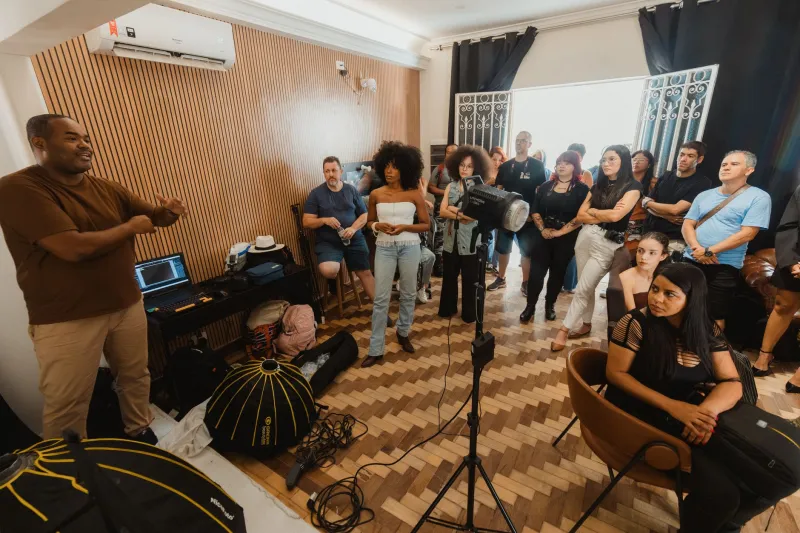
Cohort learning — in which a defined group of professionals moves through a curriculum together on a shared timeline — is one of the most reliable accountability structures available. The shared timeline creates natural social pressure to keep pace. The group dynamic creates a sense of mutual investment in collective progress. And the regular touchpoints built into cohort structures provide the feedback loops that solo learning lacks.
Professionals who have completed cohort-based certification programs consistently report that the peer relationships formed during the program were as valuable as the curriculum itself — not only for accountability during the program, but as professional networks that continued to generate value long afterward.
Professional Circles and Peer Learning Groups
For professionals whose schedules make formal cohort programs impractical, smaller peer learning groups — sometimes called professional circles or learning pods — offer a more flexible alternative. These are typically self-organized groups of three to six professionals who share development goals and meet regularly to report progress, discuss challenges, and hold one another to commitments.
The key to making these groups effective is specificity. Vague commitments to "keep learning" produce vague accountability. Groups that establish concrete, time-bound goals — complete Module 4 by Thursday, submit the practice exam by the end of the month — and that review those commitments explicitly at each meeting tend to sustain momentum far longer than groups that operate informally.
Mastermind Groups
The mastermind group model, which traces its conceptual roots to Napoleon Hill's Think and Grow Rich and has been adapted extensively in American entrepreneurship culture, applies particularly well to senior professionals pursuing complex, long-horizon development goals. These groups typically bring together a small number of peers at comparable career levels who meet regularly — often monthly — to share goals, report progress, and offer structured peer advisory input.
Mastermind groups are less suited to skills-based learning that requires frequent short-cycle accountability and better suited to the kind of strategic career development decisions — whether to pursue a new certification, how to position a credential transition, how to build visibility in a new domain — that benefit from the perspective of experienced peers.
Formal Mentorship Structures
One-on-one mentorship, when structured with clear expectations and regular check-ins, provides a form of accountability that is particularly valuable for professionals navigating significant career transitions. The asymmetry of the mentorship relationship — in which one party brings substantially more experience — adds a dimension of guidance that peer accountability structures cannot replicate.
The critical variable is structure. Mentorship relationships that lack defined goals, regular meeting cadences, and explicit accountability mechanisms tend to drift into occasional conversations that feel valuable but produce limited developmental progress.
Case Studies: When Community Accelerated Career Outcomes
The evidence for community-based learning is not purely theoretical. Professionals across industries have documented meaningful career acceleration that they attribute directly to the accountability structures they participated in.
In the technology sector, professionals who completed cohort-based cloud certification programs alongside peers from other organizations consistently reported faster credential attainment and higher exam pass rates than their counterparts who pursued the same certifications independently. Several attributed this advantage not to the quality of the curriculum — which was identical — but to the social expectation of keeping pace with a group.
In financial services, informal peer learning groups formed around Chartered Financial Analyst (CFA) exam preparation have become a documented feature of high-pass-rate study strategies. The intensity of the CFA curriculum is such that solo preparation, while possible, leaves most candidates without the feedback mechanisms and sustained accountability that group preparation provides.
In healthcare, cohort-based continuing medical education programs have shown consistent advantages in knowledge retention and clinical application rates compared with self-paced alternatives — a finding with direct implications for patient outcomes as well as professional development.
Evaluating Which Model Fits Your Learning Style
The right accountability structure depends on several factors specific to your situation.
If your development goals are time-sensitive and curriculum-based, a formal cohort program or structured peer study group will likely serve you best. If your goals are more strategic and longer-horizon, a mastermind group or mentorship relationship may be more appropriate. If your schedule is highly variable, a small peer circle with asynchronous check-in options may offer the best balance of accountability and flexibility.
What matters most is not which model you choose, but that you choose one deliberately — and that you commit to it with the same seriousness you bring to the learning goals it is designed to support.
The professionals who advance most consistently through AIDA Academy's programs and beyond are rarely those with the most natural aptitude or the most generous learning budgets. They are the ones who understood early that learning in community is not a luxury — it is a prerequisite for the kind of sustained development that actually moves a career forward.